
LifeWithMyDogs is supported by our audience. When you purchase through one of our links, we may earn a small affiliate commission. As an Amazon Associate I earn from qualifying purchases. Your cost is not affected.
**********
Dogs love to play, and watching them romp around brings joy to any pet parent’s life. As a dog trainer, I’ve seen many worried faces when pets get rowdy during playtime. It’s natural to wonder if that growling and wrestling means fun or trouble.
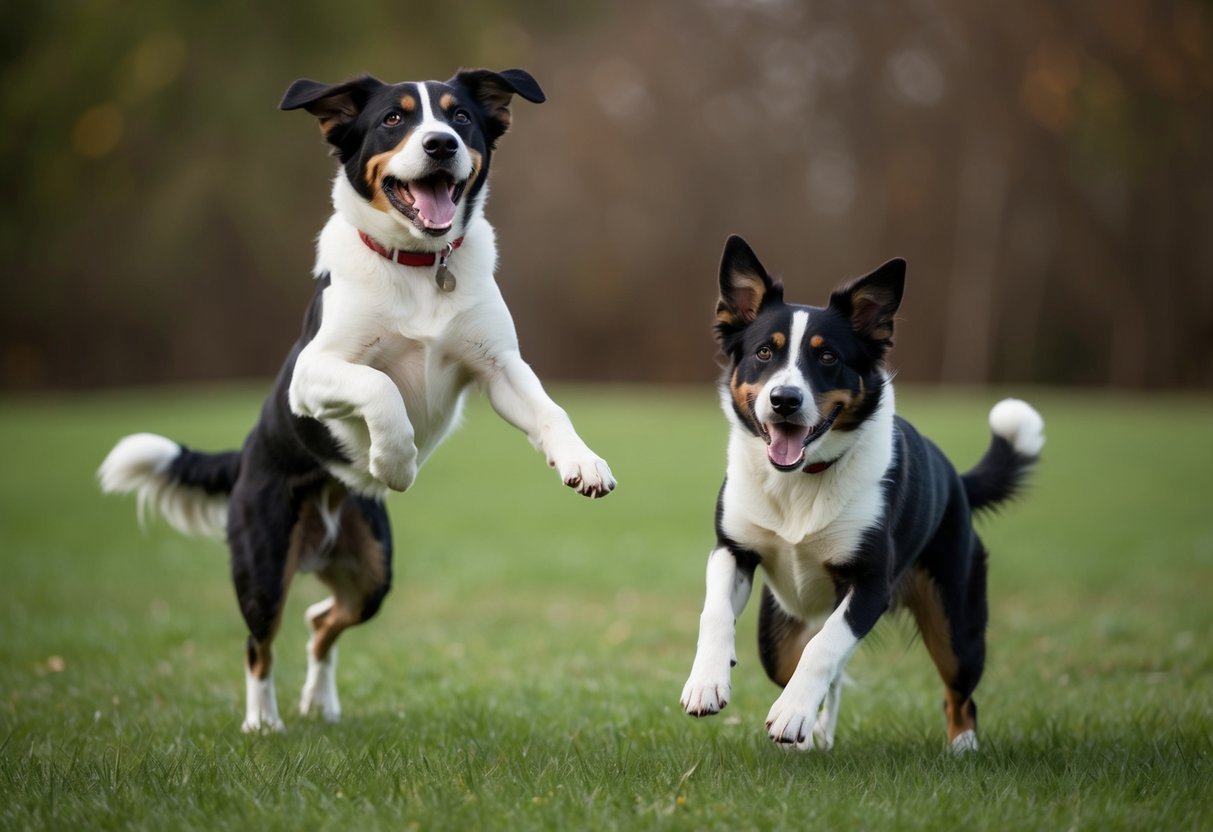
The main difference between playful and aggressive behavior shows up in body language – playful dogs have relaxed, bouncy movements with play bows and happy vocalizations, while aggressive dogs display stiff postures, raised hackles, and deep threatening growls.
When dogs play, they take turns being the chaser and the chased, showing restraint even during rough-looking play.
I’ve learned that proper play helps dogs develop social skills and burn energy in a healthy way. Good play includes pauses, role reversals, and matched energy levels between playmates. Dogs naturally adjust their style based on their play partner’s size and personality.
Key Takeaways
- Play bows, bouncy movements, and taking turns signal friendly play between dogs
- Stiff bodies, deep growls, and one-sided chasing point to aggressive behavior
- Dogs need regular supervised playtime to develop good social skills and stay happy
Recognizing Playful Behavior
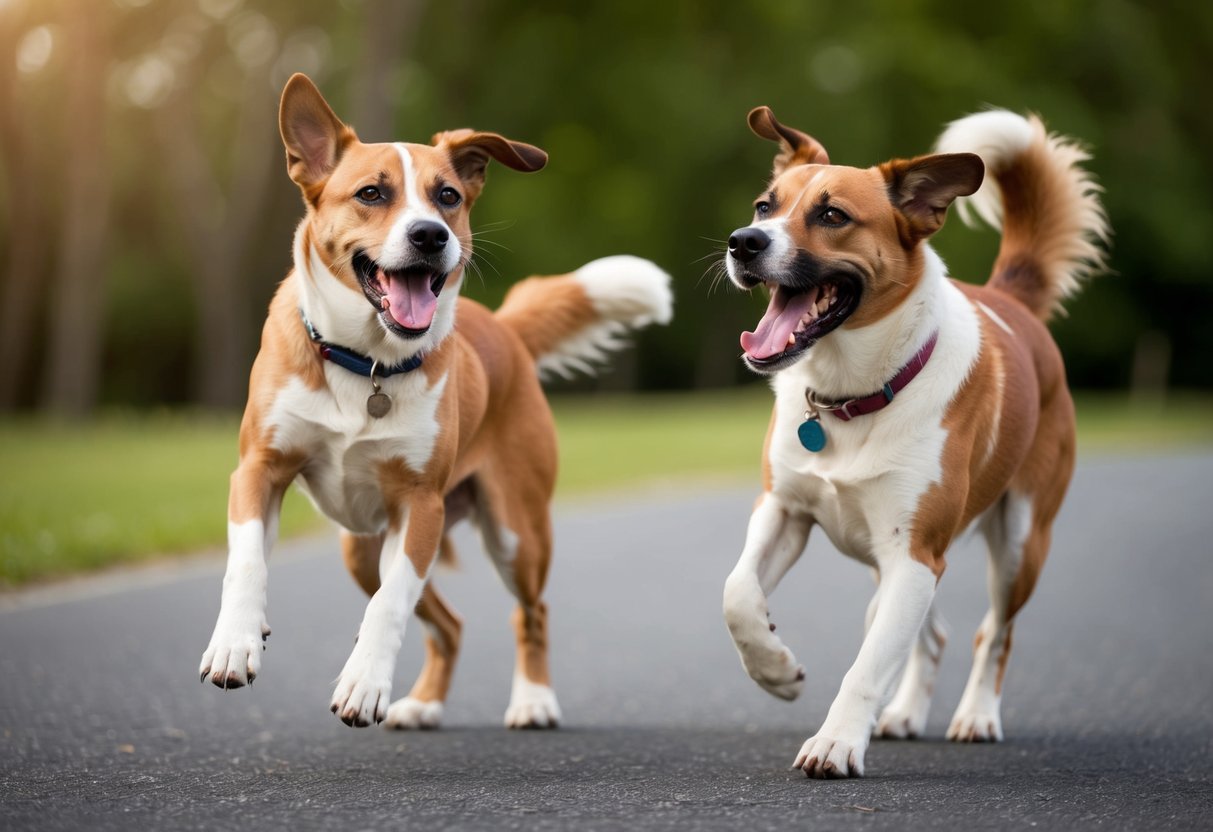
Dogs show their playful side through specific body language and sounds. Watching these signals helps me understand when my dog wants to have fun.
Understanding Play Bows and Bouncy Movements
Play bows are one of the clearest signs I look for – when my dog lowers their front end while keeping their back end up, they’re saying “Let’s play!”
I’ve noticed that playful dogs move with a bouncy, loose energy. Their movements are light and silly, almost like they’re dancing.
During play, I often see dogs taking turns being the chaser and the one being chased. This role reversal shows they’re having fun together.
The Role of Tail Wagging and Vocalization
When my dog is playing, I see their tail wagging loosely from side to side. The whole body often wiggles along with it – this is a happy, playful signal.
Playful barks sound different from other barks. I hear them as shorter, higher-pitched sounds, often with pauses between them.
My dog might make small play growls too. These are softer than aggressive growls and come with relaxed body language.
I can tell play sounds apart because they start and stop naturally. My dog takes breaks to check in with their playmate and with me.
Identifying Signs of Aggression
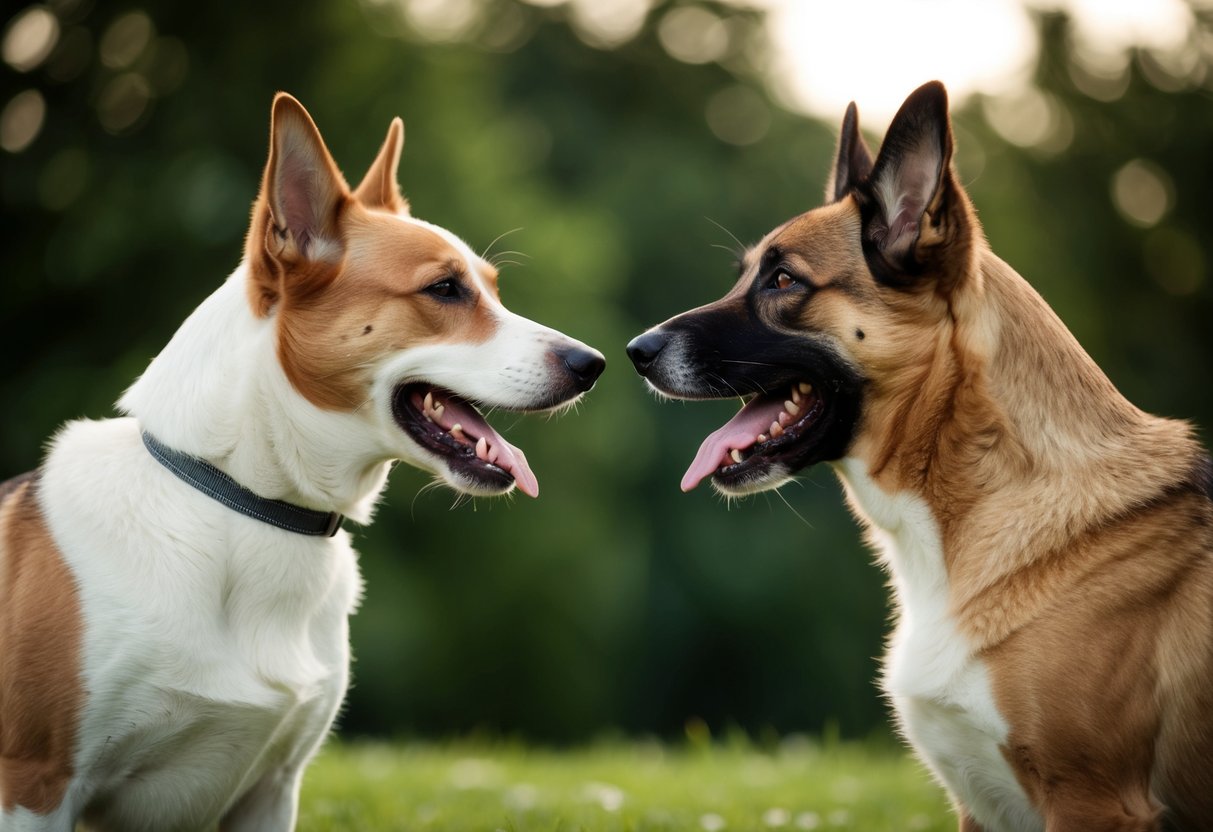
Dogs show specific signs when they feel threatened or aggressive. I want to help you spot these warning signals before they escalate into serious issues.
From Growling to Aggressive Barking
I’ve noticed that aggressive vocalizations come in different forms. A deep, rumbling growl with closed mouth is a clear warning sign. This differs from the lighter, bouncy growls during play.
Barking patterns matter too. Watch for these warning signs:
- Sharp, rapid barking with no pauses
- Low-pitched, intense barking
- Snarling or showing teeth while barking
I always pay attention when a dog’s barking changes from playful to threatening. The sound becomes deeper and more forceful.
The Significance of Body Posture and Raised Fur
When I see a dog with stiff body posture and raised hackles, I know they’re feeling threatened. The fur along their back stands up, and their muscles become very tense.
Watch for these body language signals:
- Tail held high and stiff
- Direct, intense eye contact
- Forward-leaning stance
- Ears pinned forward or flat against head
I can tell a dog is becoming aggressive when they make themselves look bigger by standing tall and rigid. Their movements become very controlled and deliberate instead of loose and bouncy.
Canine Social Play and Development
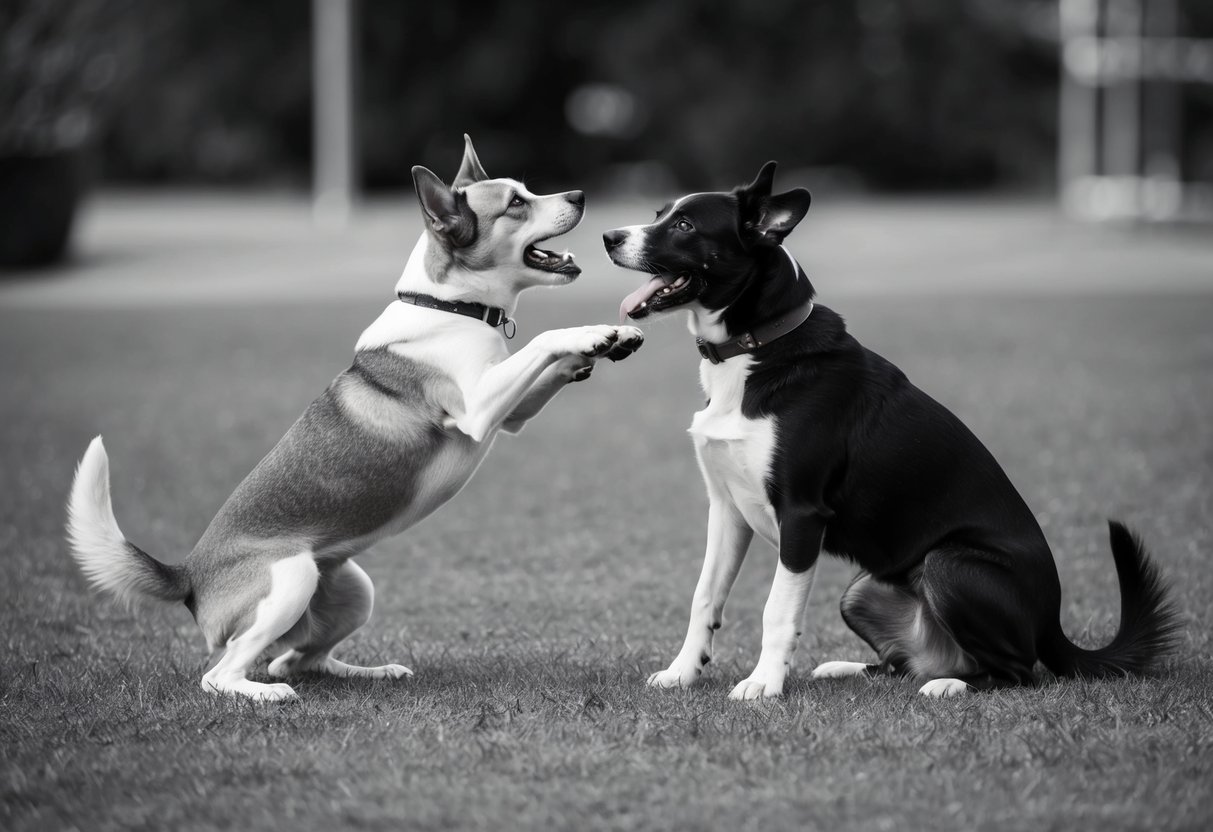
Dogs learn vital social skills through play starting in puppyhood. Play helps them build relationships and develop proper behavior with other dogs and humans.
Interactive Play and Its Benefits
I’ve seen how play helps build social relationships and is key for brain development in dogs. When dogs play together, they practice important life skills and learn to read body language.
Play teaches dogs to control their bite strength. This is called bite inhibition, and it’s crucial for preventing accidental injuries during play.
Your dog can learn these skills through:
- Play bows and chase games
- Gentle wrestling matches
- Taking turns being chaser and chasee
- Rolling over to show playfulness
Navigating Play Fighting and Play Biting
Normal play includes play-biting and mock fighting, but it’s important to know what’s okay and what’s too rough. Look for these signs of healthy play:
- Relaxed body language
- Bouncy movements
- Taking breaks naturally
- Equal back-and-forth interaction
I recommend watching for signs that play might be too intense, like stiff body posture or constant chasing without switching roles. If you see these signs, calmly separate the dogs and let them cool down.
Always supervise play sessions between dogs, especially when they’re meeting for the first time.
Types of Dog Play Styles

Different play styles in dogs can range from gentle games to energetic roughhousing. I’ve noticed that each dog has their own unique preferences, just like we humans do.
Understanding the Variety in Play Styles
Some dogs love rough and tumble playtime, while others prefer gentler interactions. I’ve seen this especially in sporting breeds like Labradors, who often engage in more physical play.
Common Play Styles:
- Body slamming and wrestling
- Chase games
- Gentle mouthing
- Paw batting
- Play bowing
When I watch dogs play, I can tell they’re having fun when they take turns being the chaser and the one being chased. Their body language stays loose and wiggly.
Independent Play and Pack Dynamics
I’ve observed that some dogs enjoy playing by themselves with toys, while others thrive on group play. This often relates to their natural pack instincts.
Single-dog play activities include:
- Tossing toys in the air
- Puzzle toys
- Self-directed fetch
- Digging
When playing in groups, dogs naturally establish play roles based on their personalities. I’ve noticed that some dogs act as the initiators, while others prefer to follow along.
Pack play often involves taking turns and showing respect for each dog’s boundaries. Strong players will often self-handicap when playing with smaller or more timid dogs.
Managing and Encouraging Appropriate Play
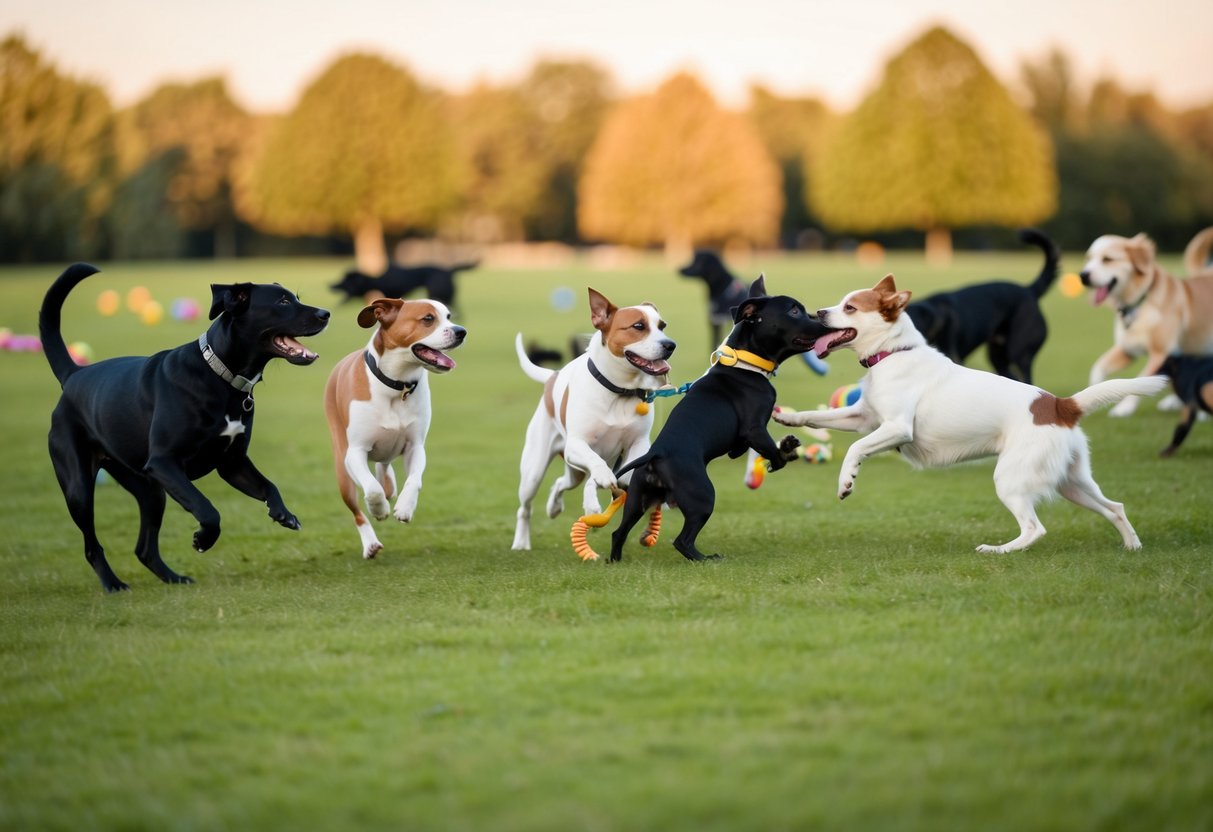
I know that guiding dogs toward positive play behaviors takes patience and the right training approach. The key is working with professionals and using proven reinforcement methods.
Role of Professional Dog Trainers and Behaviorists
I strongly recommend working with qualified dog trainers who specialize in play behavior. These experts can observe your dog’s specific play style and identify any concerning patterns.
A professional trainer will help teach you to read your dog’s body language during play. They’ll point out signs of both relaxed and tense postures.
I’ve found that animal behaviorists are particularly helpful for dogs who show signs of play aggression. They create customized intervention plans based on your dog’s unique needs.
Creating a Positive Reinforcement Training Plan
I always start with reward-based methods to encourage good play behaviors. Treats, praise, and toys work great as rewards when your dog shows appropriate play.
Set clear boundaries by interrupting rough play immediately. Then redirect your dog to a calmer activity.
I recommend short training sessions – just 5-10 minutes at a time. Keep it fun and upbeat!
Create a consistent schedule for supervised play sessions. This helps your dog learn when it’s okay to get playful while staying under control.
Remember to reward calm greetings and gentle play styles. Your dog will start to understand which behaviors earn the good stuff.
Recognizing the Need for Intervention
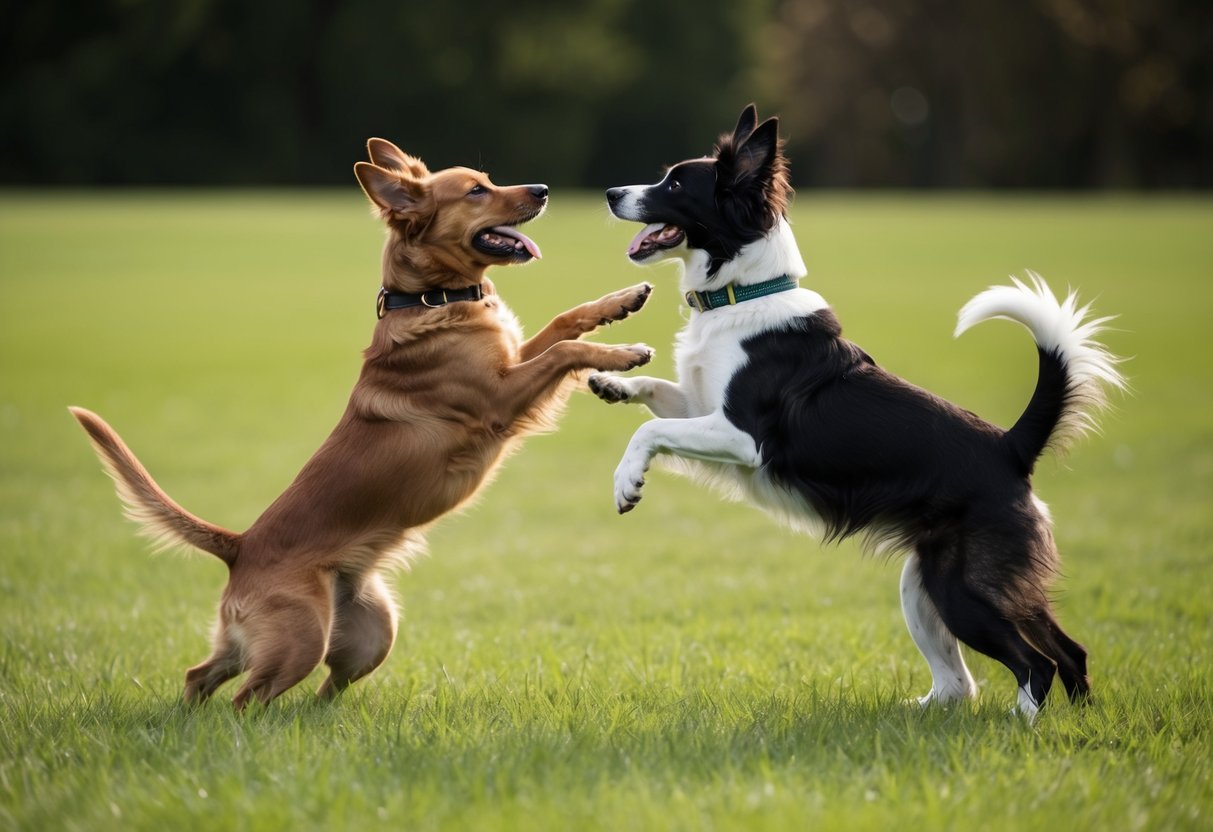
I’ve learned that watching for specific warning signs helps keep dogs safe during play. Quick action can prevent minor issues from becoming serious problems.
Signs That Suggest a Need for Behavioral Intervention
I watch for stiff body posture and raised hackles during play sessions. These physical signs often mean a dog is uncomfortable or stressed.
When I see a dog ignore calming signals from their playmate, like turning away or lip licking, it’s time to step in. Signs of aggressive behavior include:
- Intense staring or “hard eyes”
- Repeated mounting behavior
- Excessive growling with teeth showing
- One dog consistently pinning another down
I always pay attention when play becomes too one-sided. If one dog keeps trying to escape or hide, they’re not having fun anymore.
Dealing with Redirected Aggression and Reactivity
I know that redirected aggression can happen suddenly when an excited or frustrated dog shifts their focus. This often occurs when dogs are separated by barriers like fences or leashes.
To manage reactive dogs during play, I:
- Keep play sessions short
- Give frequent breaks
- Remove triggers when possible
- Maintain distance from other dogs
I find that using positive reinforcement helps reduce reactivity. Rewarding calm behavior creates better play experiences for everyone.
When multiple dogs play together, I make sure to monitor their energy levels. Overexcitement can quickly lead to redirected behaviors.
Frequently Asked Questions
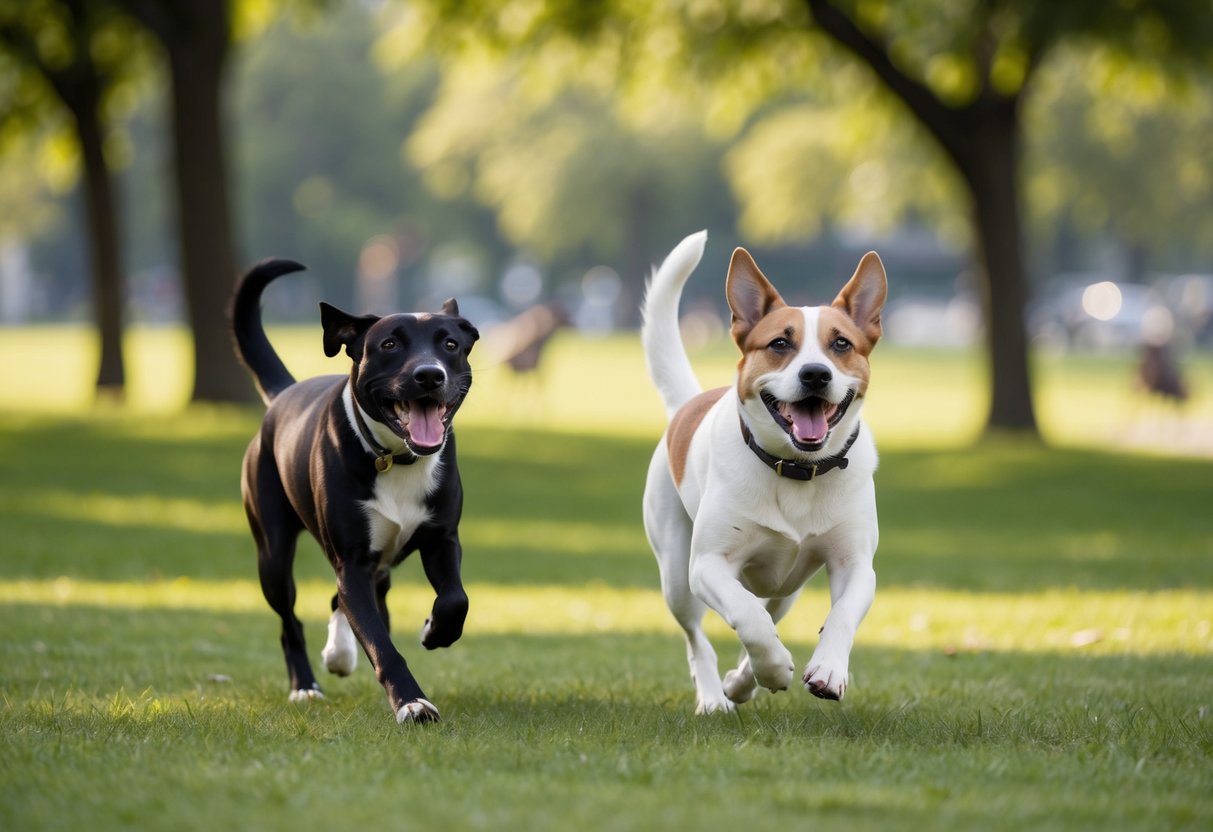
Dogs use specific body language and behaviors to communicate their intentions during play. I’ll help you decode what your dog is trying to tell you and share tips to keep playtime safe and fun.
How can I distinguish between play fighting and real aggression in dogs?
Play fighting includes relaxed body language like bouncy movements, play bows, and taking turns.
The dogs will pause frequently and switch roles between chaser and being chased.
Aggressive fighting shows stiff body postures, raised hackles, and intense growling. One dog may not respect the other’s signals to stop or take breaks.
What are the signs of inappropriate or aggressive play in puppies?
Inappropriate puppy play involves excessive force, constant pinning, or refusing to let the other puppy get up.
Watch for stiff body posture, deep growling, or snapping.
I recommend stopping play if you notice a puppy that won’t take turns or keeps bothering another puppy who is trying to get away.
Is play biting a sign of aggressive behavior in dogs?
Normal play biting uses gentle pressure and releases quickly. The biting dog will have a relaxed, open mouth and waggy tail.
Aggressive biting involves hard bites, a closed and tense mouth, and may leave marks. The dog might also growl deeply or snap repeatedly.
What steps can I take to prevent aggression during dog playtime?
Give dogs plenty of breaks during play sessions. I suggest separating them briefly if they get too excited.
Monitor body language closely and intervene before play escalates.
Make sure each dog has space to move away if they want to pause.
How do I know if my dog is just playing or if they are showing signs of aggression towards me?
Playful dogs show loose, wiggly body language with play bows and gentle mouthing.
They’ll pause when you stop engaging.
Signs of aggression include hard stares, stiff posture, and intense growling. An aggressive dog may not back off when you try to end the interaction.
Can play biting between dogs escalate to dangerous levels?
Play biting can intensify if dogs get over-excited or one feels threatened. Watch for mounting tension in their bodies. Also, watch out for increasingly forceful bites.
I always separate dogs if play biting becomes too rough or one dog seems uncomfortable. This prevents minor conflicts from becoming serious fights.